Rotarian John Paul Henry shares how a connection with Lawrence Rotary sparked an adult women’s literacy program now changing lives in Uganda. Discover how one conversation created a ripple effect with the potential to transform generations.
By John Paul Henry, PhD
[click here to watch a 3-min video about this project]
It’s been less than a year since I joined the Lawrence Rotary Club, and I find myself in the backseat watching the sun rise over the African savannah.
After bouncing over cratered roads in the dark, we emerge from dense forest to see antelope and a baby elephant flanked by two cautious adults with very large tusks. We are traveling across Uganda, from Lake Victoria in the south to Yumbe District near the South Sudan border. This is West Nile, a region ravaged by decades of civil war.
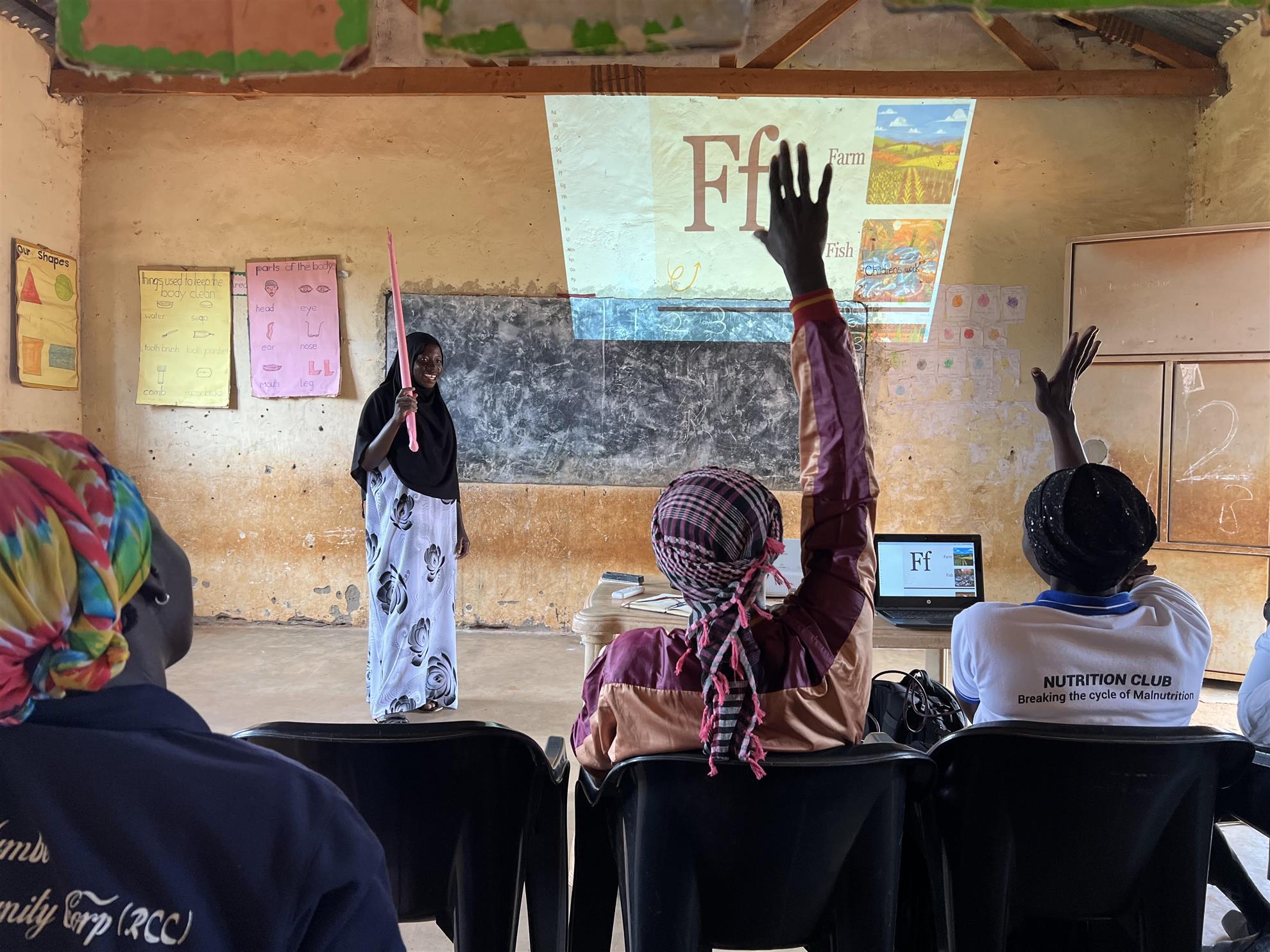
I am here to launch a literacy program for adult women who otherwise might never have the opportunity to learn to read. For a week, I will travel by motorbike from village to village, meet with women-run savings and loan groups, observe teaching at a nonprofit school, and train local community educators.
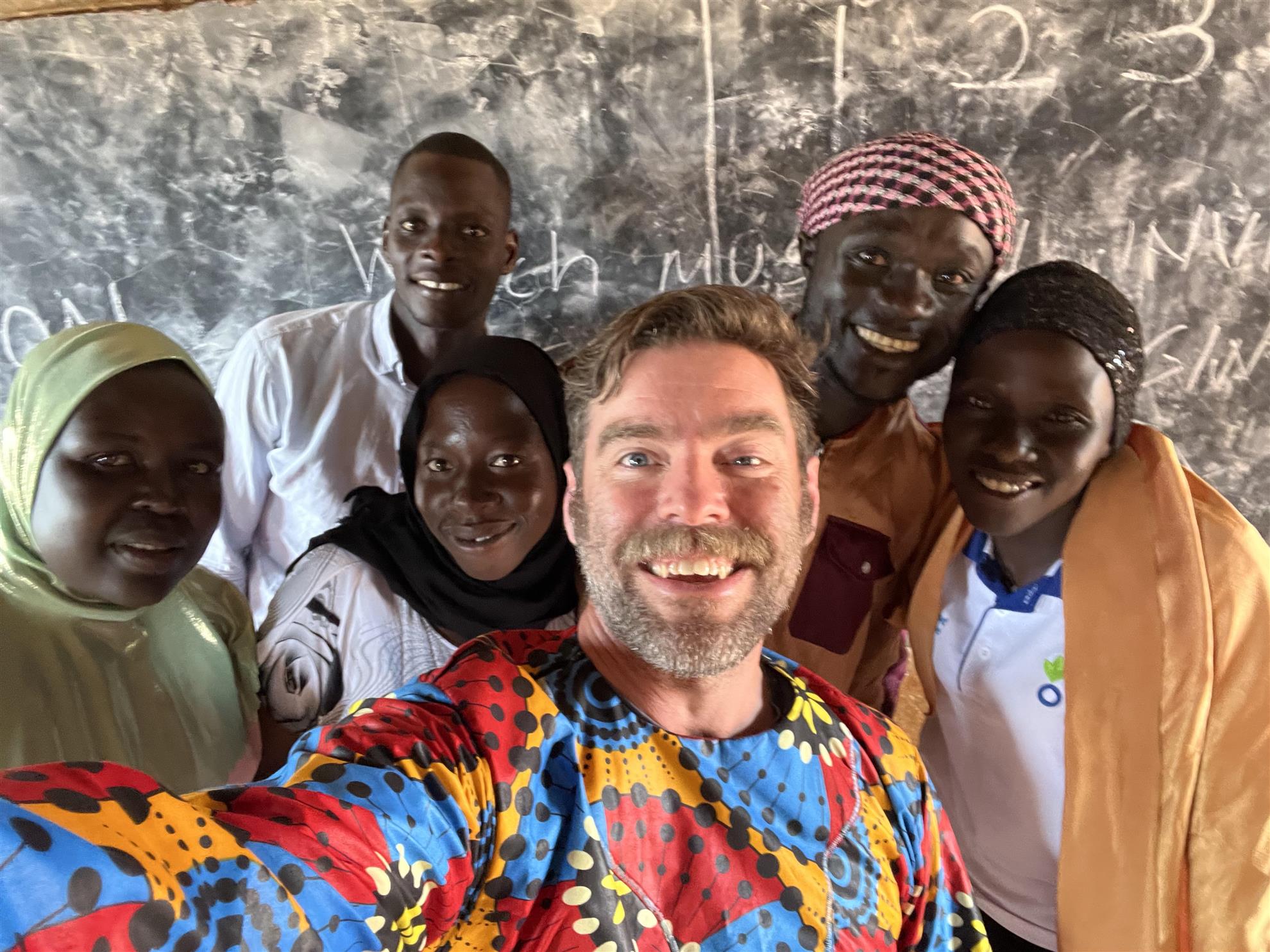
How did I find myself here?
In the summer of 2025, I was transitioning out of my educational research position at KU and looking for ways to use my talents. On the Lawrence Rotary Club website, I learned about the club’s literacy project in the Philippines.
Aha! I suspected I had found my people, so I visited. When I heard the club sing “Home on the Range,” I was sold.
Six months later, Tony Walton organized a meeting about Rotary-affiliated projects in Uganda. Through that effort, I connected with Rotarians Agnes Muyanga and Chris Roesel. Muyanga moved me with the story of starting a small nonprofit school for pregnant girls in her village. Roesel, a retired public health expert, invited me to attend a hybrid meeting of the Yumbe Rotary Club.
The energy of Uganda poured out of that Zoom call. I offered to support an education project, unsure where it might lead.
The next morning, I received an email from Ajaga Innocent, executive director of the Care Community and Education Center in Yumbe. We developed a plan for an adult women’s literacy program, and I met online with Innocent and his staff every week for months to design the curriculum.
In March 2026, Roesel and I traveled to Uganda—he to monitor a water and sanitation project and I to launch the literacy program.
Thus, Word by Word Uganda was born.
Changing Lives
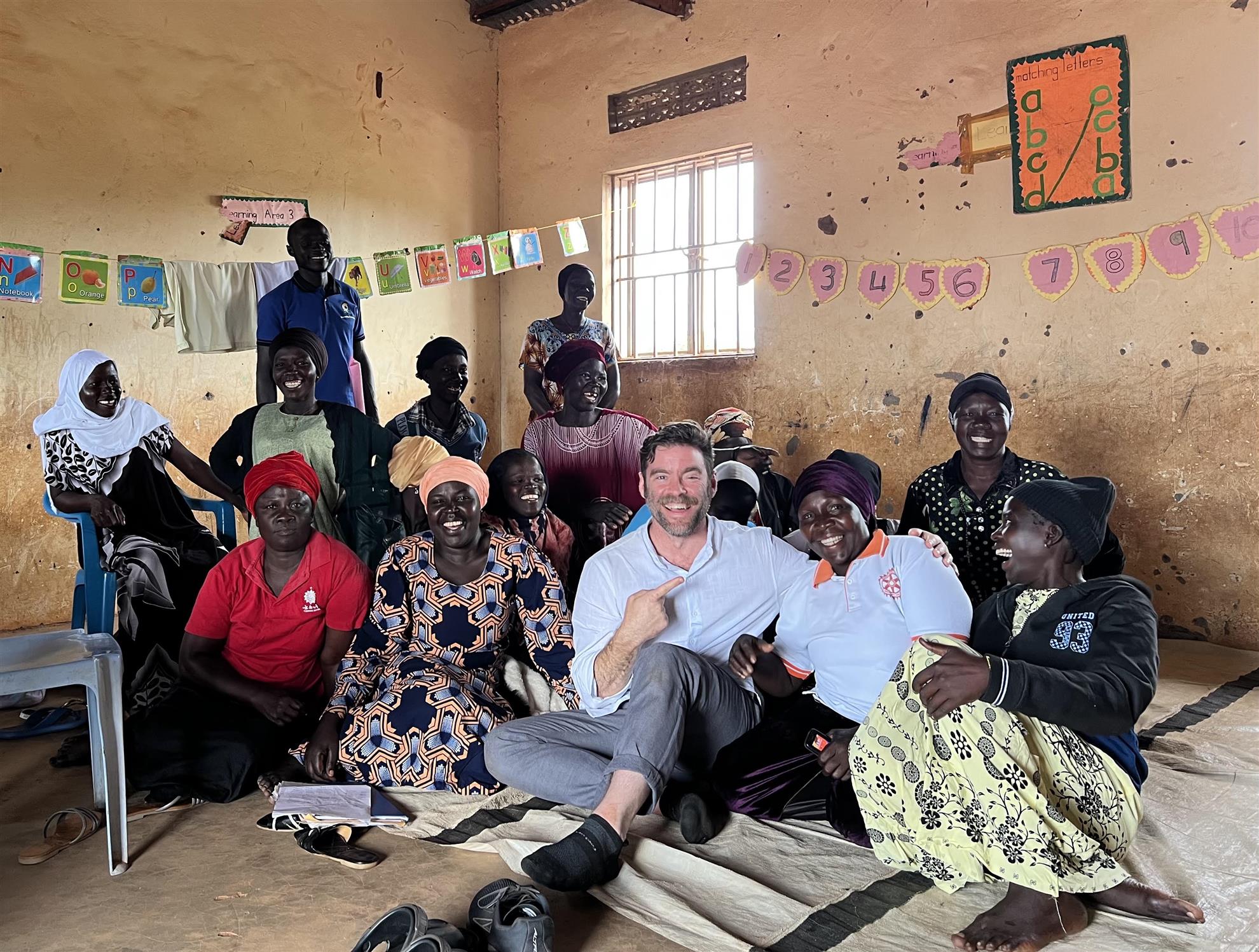
Seventy-five percent of the women we met had never attended school. Along with access to clean water, education is a critical pillar of development and economic mobility.
I designed a culturally relevant curriculum that incorporates local songs, gardening, and health information on concerns such as malaria. A Lawrence Rotary Club grant funded a projector, tablet, and facilitator training. The curriculum also uses modern phonics to help learners blend letter sounds, decode words, and unlock literacy.
September is Rotary’s Basic Education and Literacy Month, making this an ideal time to reflect on the program’s progress. One learner hopes to teach 10 children in her village who cannot afford school. Another, who drills wells by hand, is applying for internships to become an early childhood teacher now that she can write. A woman in her 50s told me this is the first school she has ever attended—and that she is proud to be able to write her own name.
In a real and tangible way, the Lawrence Rotary Club changed not only my life but also the lives of women receiving an education in Africa today. This opportunity would not have happened otherwise. Thank you for that gift.
What’s Next?
The first cohort of 30 women will graduate from the Level 1 literacy and numeracy course at the end of October. They will then be able to begin teaching children in their villages.
Recently, I received a video of the classroom singing. A girl about four years old stood beside the women, looking up and singing along. This program has the potential to create generational change—not only in literacy, but also in how young Ugandan women see their futures.
Many learners want to continue their education, but no established pathway currently exists.
That’s where you come in.
I am developing ways for people in Lawrence and beyond to connect with and support these learners through familiar digital technology. To learn more about serving online or to receive project updates, email johnhenryphoto@gmail.com.
John Paul Henry, PhD